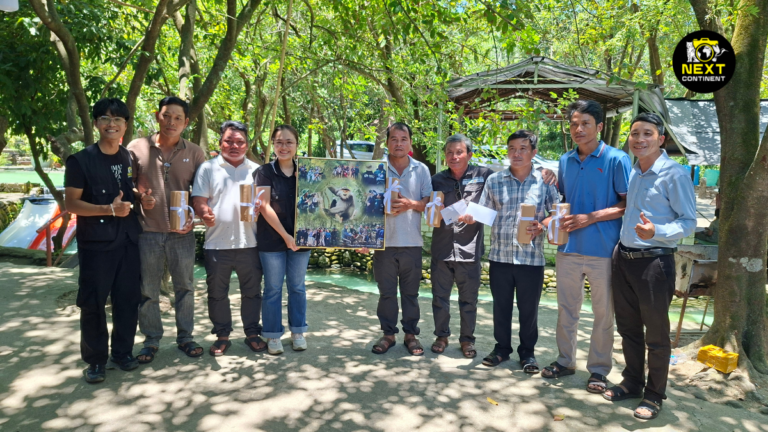
Last Friday, our team spent an incredible day developing our field skills and exploring the world’s most diverse and fascinating creatures — insects! In partnership with renowned Vietnamese entomologist Phan Toan, we delved deeper into the study of entomology to strengthen our expertise and bring even greater field knowledge to all of our wildlife tours.
The morning began with a seminar introducing us to the foundations of entomology, how insects are classified, and how to safely observe and handle them in the field, and safe methods for observing and handling them in the field, emphasising field awareness and respect for the natural world. We explored the classification of common insect groups, from the familiar butterflies and beetles to less-known but equally important groups such as: Diptera (flies), Hymenoptera (bees and ants), Orthoptera (grasshoppers and crickets), Coleoptera (beetles), Blattodea (cockroaches), Isoptera (termites), Phasmatodea (stick insects), Mantodea (mantises), Hemiptera (true bugs), Megaloptera, Ephemeroptera, and Trichoptera.

We learned that the best time for insect observation is before 3:00 PM, when activity peaks under warm daylight and begins to decline as temperatures drop or clouds gather. By late morning, we set out to a nearby lake in Đà Nẵng, where we spent the afternoon exploring and documenting insect diversity. Our focus was on field observation and recording methods — applying what we learned in the morning. As soon as we arrived, the area buzzed with activity. Dragonflies hovered over the streams, beetles scurried along the banks, and delicate damselflies glimmered in the sunlight.

Phan Toan also showed us how to look for insects in the field, carefully turning over leaves, scanning tall grass, peering under the logs, and checking tree bark and small holes, etc. It was a perfect chance to put theory into practice — learning how to observe, identify, and record insects in their natural habitats. Despite limited time, the variety we encountered reminded us just how rich Vietnam’s ecosystems are, even in places close to the city.


Working alongside experts like Phan Toan, who has explored almost every forest in Vietnam, inspires us to keep expanding our knowledge and deepening our field experience. Each training like this helps our team grow stronger — not just in identification skills, but in our understanding of the complex and beautiful connections that hold our natural world together.
We look forward to continuing our collaboration in more biodiversity education and eco-learning experiences in the future, helping more people see the beauty and importance of the insects that quietly sustain our ecosystems.