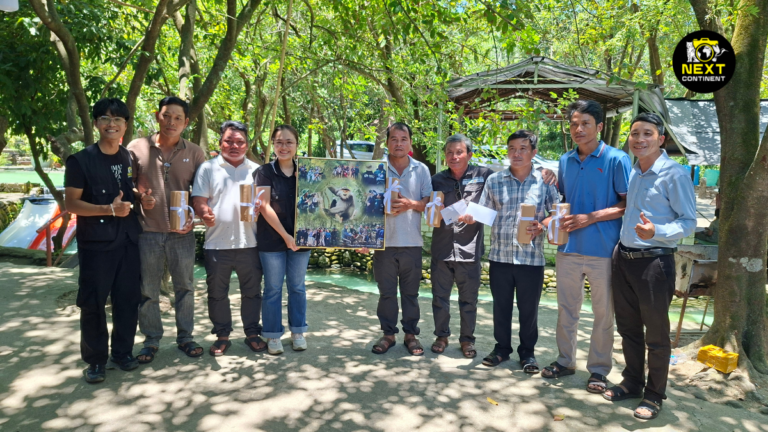
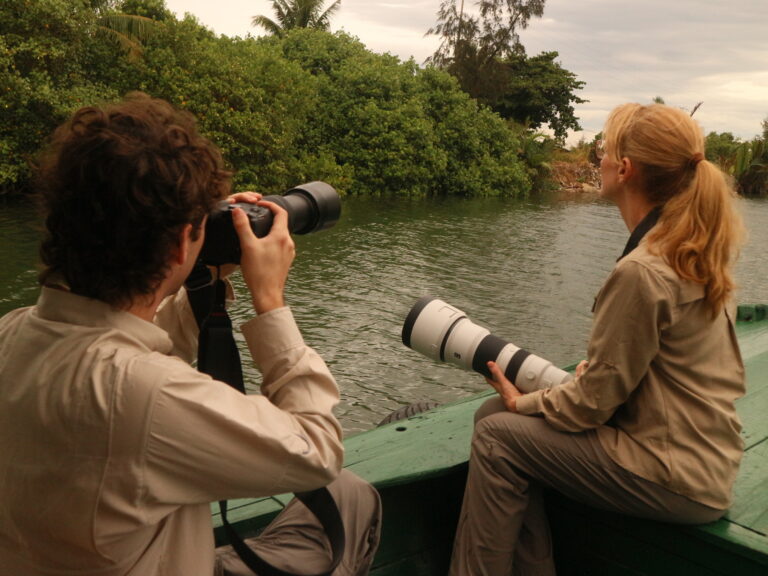
Last weekend we had a short custom primate and mammal tour for a wildlife photographer Alex from the UK. He was on a limited timeframe and very interested in our Bach Ma 3-Day Primate and Mammal Tour, so we adjusted this to an intense and focussed two-day and 1-night experience.
This tour was lead by Thanh Phan, one of lead bird and mammal guides based in Da Nang. The team departed the city early and made their way to Bach Ma, arriving at the base of the national park around 7:00am in the morning. After sorting out the entrance tickets, we went for a quick walk around the base. The first mammal of trip was Pallas’s Squirrel, one of Vietnam’s most common and wide spread species. They are often seen around the base in some of the more mature Khasi Pine (Pinus kesiya). We normally find Cambodian Striped Squirrel here, but today they were absent.
The lowlands area of Bach Ma is often skipped by visiting wildlife watchers, but can be a very successful areas for birds, butterflies, herps and some mammal species. We were searching another spot for Cambodian Striped Squirrel when a very accommodating Javan Mongoose went running across the road. They are common here, but not always easy to see, so a nice extended view of this daytime hunter was a welcome sight and an awesome way to begin the tour.
Next up was one of the major targets, the Northern Yellow-cheeked Gibbon. This species is by far one of the toughest primates to see in Vietnam. They have an extensive but fragmented range through the Annamites and the central Highlands of Vietnam. Fortunately, several families inhabit the vast forests of Bach Ma and we’re lucky to encounter them pretty regularly. We won’t go into much detail here about the specific spots. Along the way, we also stopped to enjoy some local bird specialties, including Brown (Austin’s) Hornbill and Orange-bellied Leafbird.
We reached our first Northern Yellow-cheeked Gibbon spot and set up the scope pointing at the areas they like to hang around at this time of the morning. Almost the moment we got out of the vehicle we could hear their spectacular singing (a sound that has to be heard to be believed) so we were anxious to spot them. Unfortunately, despite our best efforts the gibbons remained hidden today, but we did have the pleasure of listening them sing out-of-sight from the corner of this valley.
Before we arrived at the Villa (our base and accommodation for the night) we finally picked up Cambodian Striped Squirrel, a single animal zipping through the canopy and flushing a Barred Cuckoo Dove as it jumped through the canopy. Tick! It was time for an early lunch around 11.15am. So far we were 3x mammals seen and 1x heard, not a bad position to be in by this time.
After lunch, we checked in and put our bags away and headed off into the forest. We had diurnal targets remaining with one of the big priorities begin Red-shanked Douc Langur. This is by far the most sought-after primate in Southeast Asia. It is very easily seen in Son Tra (back in Da Nang) however, our guest had a choice between Son Tra with limited mammal opportunities and Bach Ma and chose the option with more targets (good choice!) but this meant we needed to sort out the Red-shanked.
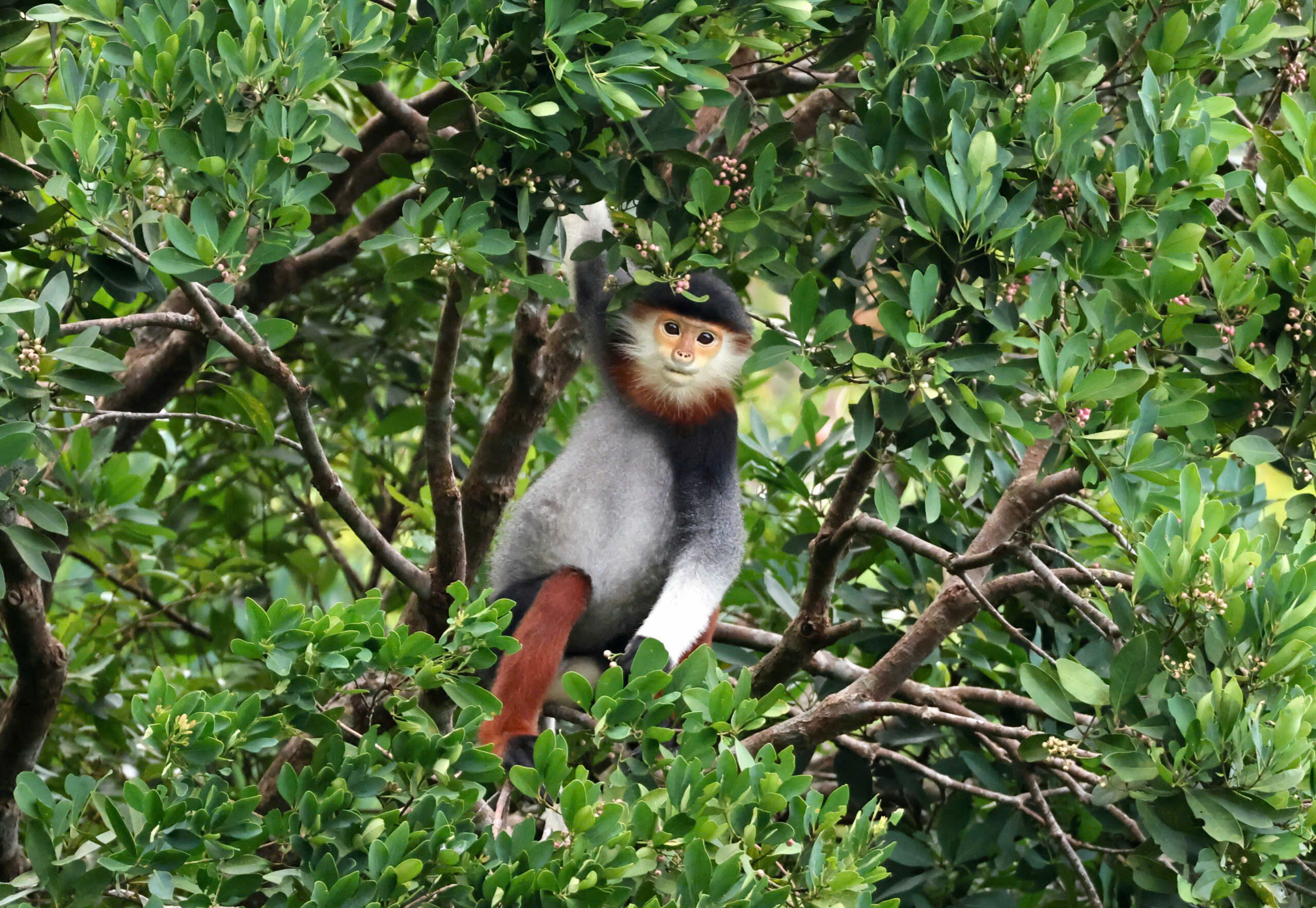
Thankfully only an hour after lunch we tracked down a nice healthy troop of around 7 Red-shanked Douc Langur including a number of younger animals only a few months old. They were directly on the path and allowed us to get great close views from only around 20 metres or so away. Whilst Son Tra is an amazing place to see this species, there’s nothing quite like seeing this primate in true, undisturbed protected evergreen forest of the Annamite Ranges, a whole different experience in our view.
With the doucs on the list, we travelled further up the summit to a mine area which can have several microbat species. Today there was a small group of Intermediate Horseshoe Bat and at least two (probable) Black-bearded Tomb Bat, a nice sightings again for some mid-afternoon mammal watching, typically the worst time in Bach Ma.
We return to the accommodation for a two-hour power nap, before hoping in the car and going to our second gibbon spot for dusk. This is one of our less reliable spots but given we had missed them earlier in the day, we were keen to give them another shot. We stood at the spot with the scope watching for movement but didn’t have any luck. Just as we were about to give up, we heard the singing of the gibbons once again. Our driver (Vu) saw a flash of movement as they moved through the trees, but in the fading light we couldn’t refind them.
Back at the accommodation, we had a quick dinner and a nice cool beer before grabbing our torches and spotlighting equipment. We had two major targets for our only night in Bach Ma, they were Pygmy Slow Loris and predators such as civets, ferret badgers and anything else would be welcomed.
We started the night with a beautiful view of a Mountain Scops Owl, but quickly remembered it’s just a bird and it was time for mammals! Conditions were really good. A nice mild night with only a tiny breath of wind. Not super humid, dry or cold, just perfect. We jumped in the car and headed to our special mammal spot. On the way, Alex saw what he said was a large bat flying near the car. I think this most likely to be the Ratanaworabhan’s Fruit Bat, but despite a quick it had flown further away after we stopped the car. This is the only megabat in this part of Vietnam.

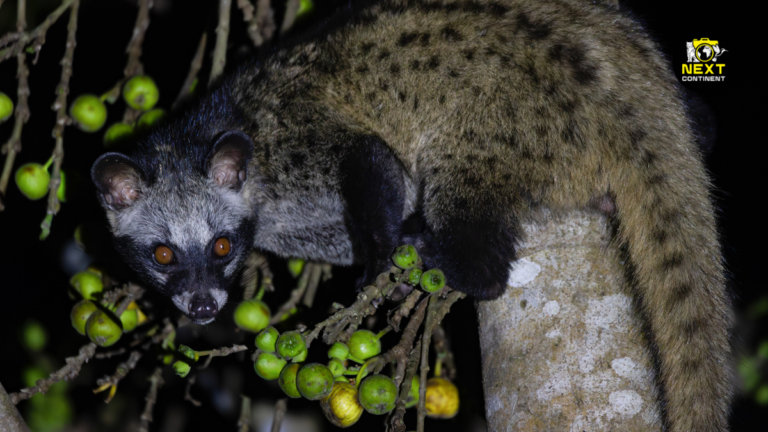
Soon we reached one of our favourite spotlighting tracks. Around us, we heard Collared Owlet and various frogs and cicadas. Our first piece of success came early with a stunning Indochinese Palm Civet (Paradoxurus hermaphroditus minor) crawling around in the canopy, giving some brief but really nice views. Only 20 minutes in and one of our targets already done. We didn’t have to continue much further when we found a second Indochinese Palm Civet, this one posing perfectly for great extended views in the fork of a tree. This was one of the major highlights of the trip, such a rarely seen nocturnal species just sitting and looking so good.
The next hour or so was a bit quiet with the occasional microbat and a rodent that got away. As things usual go, there was a great variety of moths and herps, the kind of stuff we hope for on our herping and moth tours, but that’s the way it goes. Finally after a stretch of very little we came around a corner and spotted yet another civet. This was a different species, the Small-toothed Palm Civet (Arctogalidia trivirgata) and certainly one of the harder to see ones in this area, a major bonus.
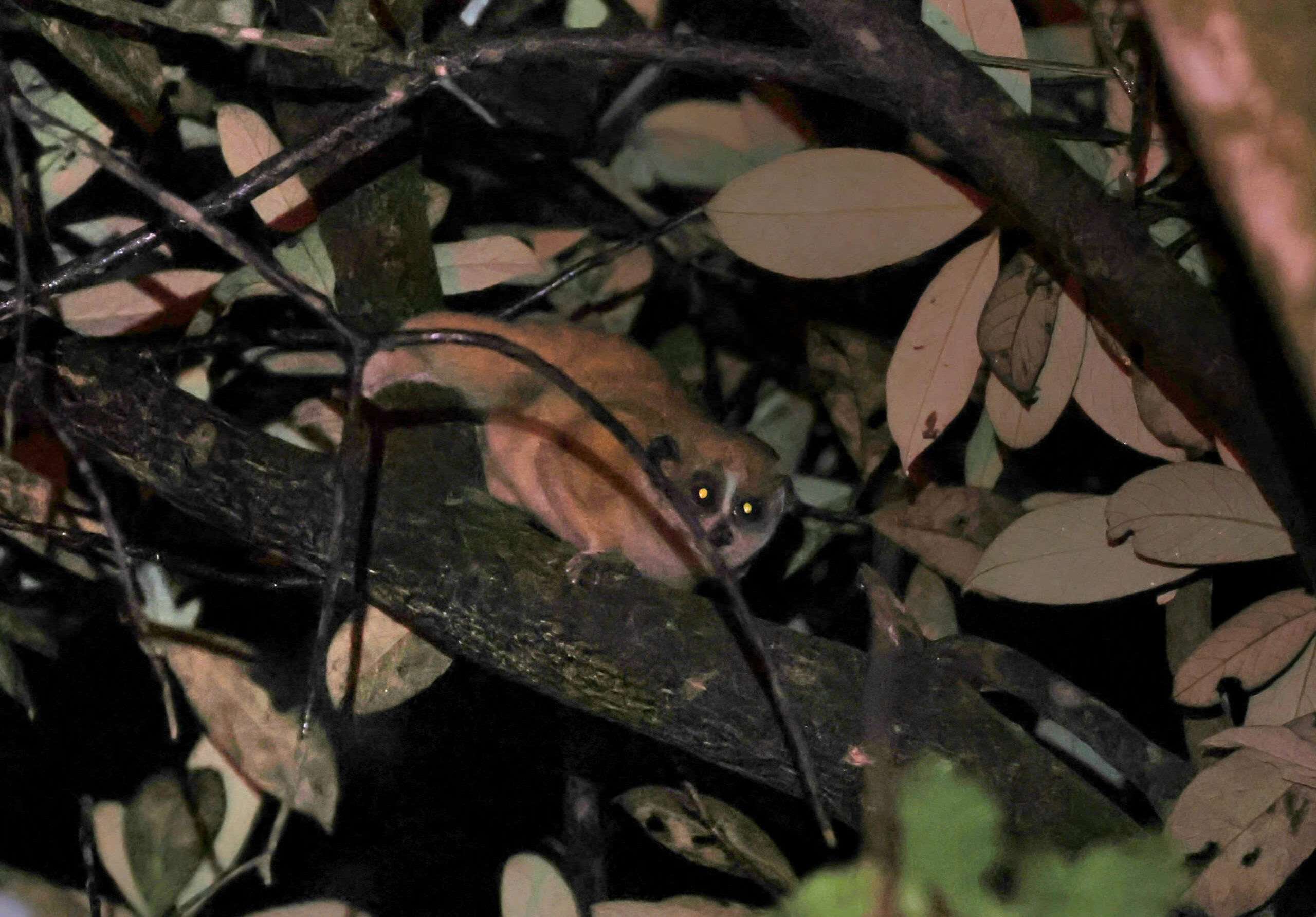
After it disappeared into the canopy and out of sight, we were still high-fiving when we picked up some eyeshine further up the path. Amazingly, it was a Pygmy Slow Loris our next target species! He was sitting really well on a nice exposed branch just watching us. After many photos it was time to head back and call it a night with our main target species sorted. Plus we had to get up early to give those gibbons another shot. One day down and 9 mammals seen and 1 heard.
The next morning we were up just before dawn and back at our best gibbon spot. We sat and waited and waited and momentarily got excited when we heard them singing again. But unfortunately we never got to see them. This was a bit disappointing but sometimes that’s the way it goes. It was affirming to hear this critically endangered primate on still three different occasions in less than 24hrs but we had been hoping of course to see them. Sometimes we have a great run when the gibbons are really spending time in key areas of the park, other times of the year they spread around a bit more. But that’s just mammal watching for you.
We were compensated with our first Indochinese Ground Squirrel running across the road and through the scrub on the drive after the gibbon. Another lifer for Alex. The rest of the morning we worked some of the higher altitude spots looking for some of the diurnal species we missed. We were rewarded with two more Red-shanked Douc Langur families, different to yesterday and spent a lot of time with the second group as they were in such good light.
The next tick came in the long-awaited Maritime Striped Squirrel our fourth squirrel of the trip and the twelfth mammal species in only a day and a half. Some nice birds keep us company including Necklaced Barbet, Fork-tailed Sunbird, Mountain Imperial Pigeon, Silver-breasted Broadbill always a major highlight.
Before the day had quite finished, we were making our way down the mountain when our driver Vu spotted a small rodent near the side of the road. We slammed on the brakes and spotted a Hoary Bamboo Rat, a very very very difficult mammal to see in Vietnam let alone during the day. This was a major win for the team and another lifer for Alex, so we ended the trip on a high thanks to a Hoary Bamboo Rat and 12 other great mammal species. Thanks Alex!
Want to book your own Bach Ma Primates & Mammal tour? You can learn more about here: https://nextcontinenttours.com/bach-ma-3-day-primates-mammals-tour/.
For information about our Vietnam-wide Mammal & Primate Tours, please visit: https://nextcontinenttours.com/vietnam-mammal-tours/
SPECIES LIST:
- Northern Yellow-cheeked Gibbon (Nomascus annamensis) — heard only
- Red-shanked Douc Langur (Pygathrix nemaeus)
- Pygmy Slow Loris (Nycticebus pygmaeus)
- Intermediate Horseshoe Bat (Rhinolophus affinis)
- Black-bearded Tomb Bat (Taphozous melanopogon)
- Hoary Bamboo Rat (Rhizomys pruinosus)
- Indochinese Ground Squirrel (Menetes berdmorei)
- Pallas’s Squirrel (Callosciurus erythraeus)
- Cambodian Striped Squirrel (Tamiops rodolphii)
- Maritime Striped Squirrel (Tamiops maritimus)
- Javan Mongoose (Urva javanica)
- Indochinese Palm Civet (Paradoxurus hermaphroditus)
- Small-toothed Palm Civet (Arctogalidia trivirgata)