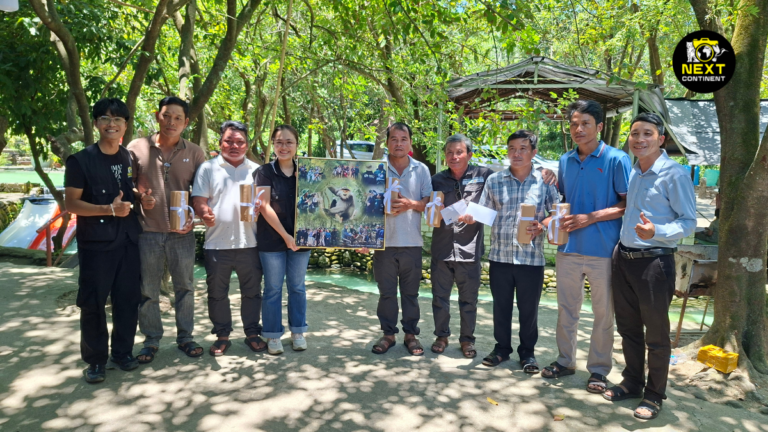
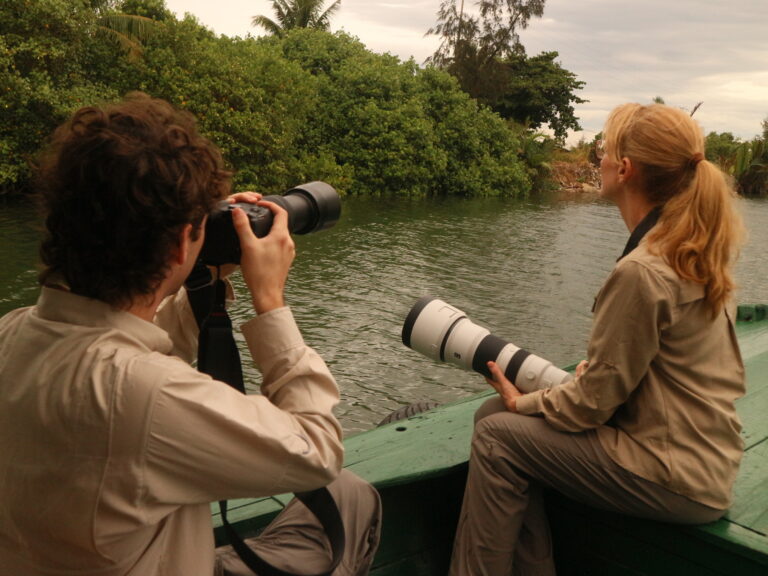
In early January, we were thrilled to welcome Gerald Broddelez (from Apex Expeditions) and his wife on a specialist mammalwatching and birding trip. This was a custom trip, designed to target a wide range of lifers that Gerald had not connected with on previous visits to Vietnam and Indochina in past years. As such, we prepared a unique itinerary that spanned from the Mekong Delta, right to the top of Northern Vietnam, searching for a unique set of some extraordinarily rare and tricky Vietnamese wildlife, including some of the most iconic and specialist species in this part of Southeast Asia.
This tour was led by our principal guide Hoang Quy, who also prepared the following trip report. What follows is a great example of what we think Next Continent to best – specialist and custom trips for serious, experienced and professional wildlife watchers and photographers.
Day 1: Ho Chi Minh City Airport – Kien Giang Province
After meeting up together in Ho Chi Minh City, our team travelled for several hours before arriving deep in the heart of the Mekong Delta at the Kien Giang Province. When we arrived, the sun had already descended about halfway over the sea, beginning to hint of an early twilight. Fortunately, we still had just enough time to track down our first major target species of the trip, the Indochinese Silver Langur.
Luck was on our side, as within 5 minutes after arriving at our secret spot, we found a good size troop of around 25~ individuals, including one newborn that I estimated to be only between 1-2 months old, as the face was still very pale with the typical off-yellowish hue of infancy.

With target one under the belt, we decided to travel a bit further west towards the Gulf of Thailand with the hope of trying to find some Irrawaddy Dolphin, one of Vietnam’s rarest resident cetacean species. Unfortunately, we weren’t successful on this occasion. When do target this species, we usually set aside a full day (or two) and head out on a boat, but you never know if you don’t try!
A successful first day, with our first major target down. Early night and bed after a big day of travel.
Day 2: Kien Giang – Ba Ria–Vung Tau
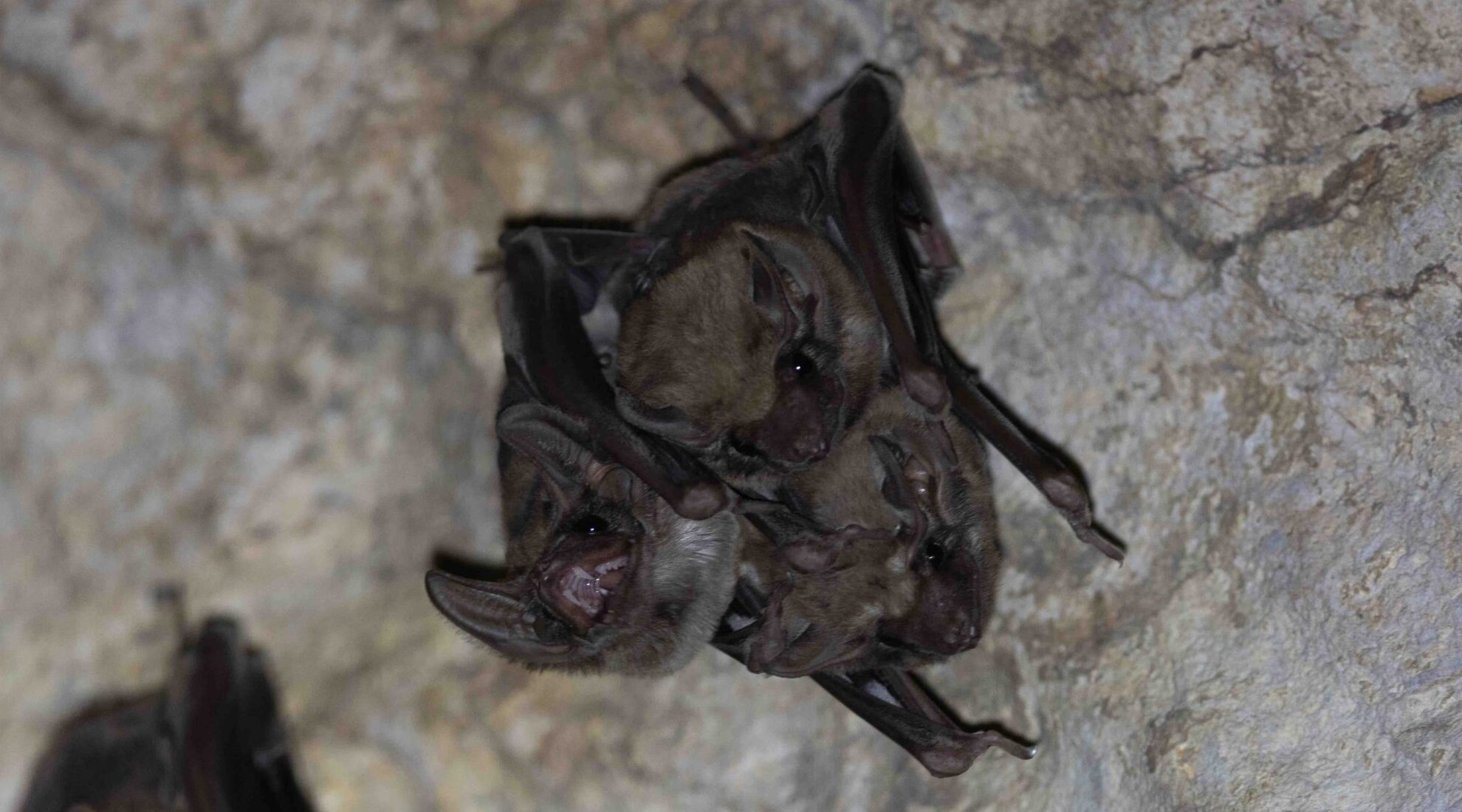
Today, we started while it was still quite dark at around 6:30 am. The conditions weren’t the best for langur watching, which made us extra grateful for yesterday’s fantastic encounters. It was relatively cool for this part of the Mekong Delta, below 20°C with strong winds. In our time searching, we only saw a single individual who appeared to be a troop scout. Instead, we decided to focus on another group of high priorities targets, bats. This part of Kien Giang has several colonies that allow for good bat-watching. Our first stop was successful, and we found a colony of Black-bearded Tomb Bat and a second group of Woolly Horseshoe Bat.
In the surrounding coastal limestone forest, we also found Cambodian Striped Squirrel (our first, but not the last for our trip) but dipped on the other resident species, Finlayson’s. Either way, with all targets under the belt, it was time to hit the road and transfer back to near Ho Chi Minh City four our next major targets.
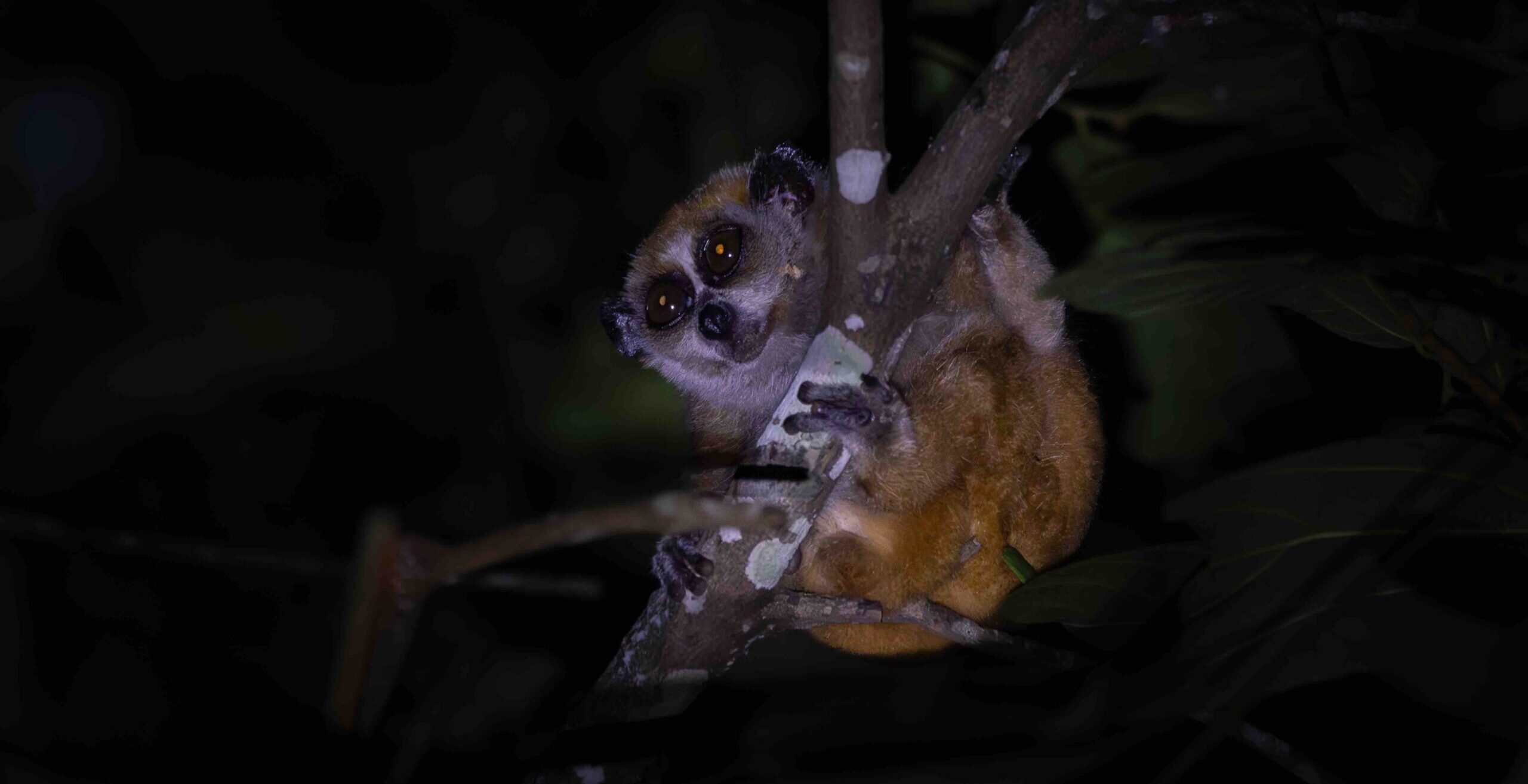
We arrived near Vung Tau on dusk and immediately went out looking for our next target, the Southern Pygmy Slow Loris. Our luck continued, as we located an extremely accommodating animal within 5 minutes! It was sitting in a tree, looking directly at us, nice and relaxed under the soft light.
We continued spotlighting for a few more hours, totalling an solid collection of wildlife including 20x Collared Scops-owl, 1x Large-tailed Nightjar, as well as a few roosting bird species such as Orange-headed Thrush, White-throated Rock Thrush and a few dozen tailorbirds. The bonus highlight came in the form of a Slaty-legged Crake, a bonus lifer! One of our most unusual observations, we picked up from a nearby termite mound and then suddenly this crake came wandering out from one of the tunnelled-out holes. Another big day and successful way to finish day 2.
Day 3: Vung Tau
Today, the main target was the very rare and hard-to-find, Annamese Langur, the close cousin to the Indochinese Silver Langur we had seen back in the Mekong Delta. But to begin, we started by having breakfast at our accommodation and looking up inside some of the palms to view a lovely cluster of Lesser Short-nosed Fruit Bat, who were roosting in the lodge grounds. Our third bat species!
Afterwards, and as with most mornings, we departed early, arriving at the site around 1hr 20 minutes later. This is a relatively unknown site (and don’t ask us where!) located in a primary forest mix of coastal broadleaf evergreen habitat, perfect for Annamese Langur. Almost immediately we connected with a Stump-tailed Macaque, a very difficult macaque to see reliably in Vietnam, even in some of their strongholds in the central Annamites. Here however, there is a tiny population likely established in decades passed due to the illegal pet trade.
Continuing on, it was time to focus on the langur. We began on our most successful trail, which is quite steep and takes a hike up through nice quality habitat. Deciding to improve our chances, we split up. Gerald remaining at the spot where we have seen this species the most, whilst I continued on searching the surrounding area. With good phone coverage, we’d reach out if either of us had any luck.
Over the next few hours, I search all five trails that intersect this part of the forest, including to the peak of nearby mountain. Here, I finally spotted some movement but these turned out to be Common Long-tailed Macaque, rather than our target. Either way, another primate species on the trip list.
After lunch, we changed our tactic. At this time, the langurs typically rest in the upper canopy, not running and feeding around as much. So we went slower, scanning the forest in more detail. Unfortunately still no luck, but we did enjoy a nice collection of other wildlife including White-crested Laughingthrush, Lesser Necklaced Laughingthrush, Blue-bearded Bee-eater, Banded Bay Cuckoo, Ashy Drongo and more.
A few more mammal encounters included our first Pallas’s Squirrel, Cambodian Striped Squirrel and a large troop of 50+ Common Long-tailed Macaque. Unfortunately the Annamese Langur were not meant to be, but we would be back in a few days to try again.
Day 4-5 – Vung Tau Region
For those playing at home, day 4 was a rest day, lined up specifically for Gerald’s birthday. So, skipping ahead to day 5, we started at around 8:00am. Again, we hiked the trail to the summit and again, failed to connect with the target Annamese Langur. Determined to carry on, we kept sharp on the descent back to the car. And finally, we were rewarded with Gerald spotting our first Annamese Langur. This is a small population here and for such a difficult to see species, we were ecstatic!

With all southern mammals successfully seen, it was time to wrap up in southern Vietnam and continue on into the Central Highlands.
Day 6: Travel to Ngoc Linh
Today was mainly a travel day as we had a lot of ground to cover. From the logistics sense, this meant an early drive and transfer from Vung Tau Cau to Ho Chi Minh City, before flying to Da Nang on the coast in Central Vietnam. Here, we met up with our central driving team and began the long drive deep into the Central Highlands area and towards Ngoc Linh.
Our main quest here were the cryptic and largely understudied endemics birds of the Ngoc Linh plateau area. We also held out a small hope for Mainland Clouded Leopard which can sometimes be seen here, but our chances were very slim.
We arrived late in the afternoon, set up for the night and prepared for a big day 7.
Day 7: Ngoc Linh – Tam My Tay
We had one single morning to track down all of the key targets in Ngoc Linh including Indochinese Fulvetta, Red-tailed Laughingthrush, Golden-winged Laughingthrush and the Black-crowned Barwing. Thanks to early hours and some hard field time we successfully pinned down every species by midmorning, one of our most successful mornings ever in the area.
Primed on our success, we decided to push on to Tam My Tay (back towards the coast and a few hours south of Da Nang) in preparation back to mammal targets. It’s a tough drive, so we arrived here after dark.
Day 8: Tam My Tay – Son Tra Peninsula
Today, the major target was the critically endangered Grey-shanked Douc Langur. This is the most sought-after langur in Vietnam. Crticially endangered and barely seen, it is a high priority for visiting mammal watchers and primate photographers when they visit Vietnam. As it was winter, we started at the later time of 8:00 am, meeting up with our trackers from the local community who work hard-in-hard with Next Continent and GreenViet, who are the original protectors of this highly threatened population.
Today, it appeared luck was on our side, as our team has already spotted a lone individual sitting out on a cliff edge, enjoying the morning sun. We quickly raced over to the cliff area and were rewarded with a superb view of our major target, a lovely Grey-shanked Douc Langur sitting in the middle of a tree. We watched this area for around 20-30minutes and over this period, the rest of the small group was revealed, turning out to be a small troop of around 4~ individuals.
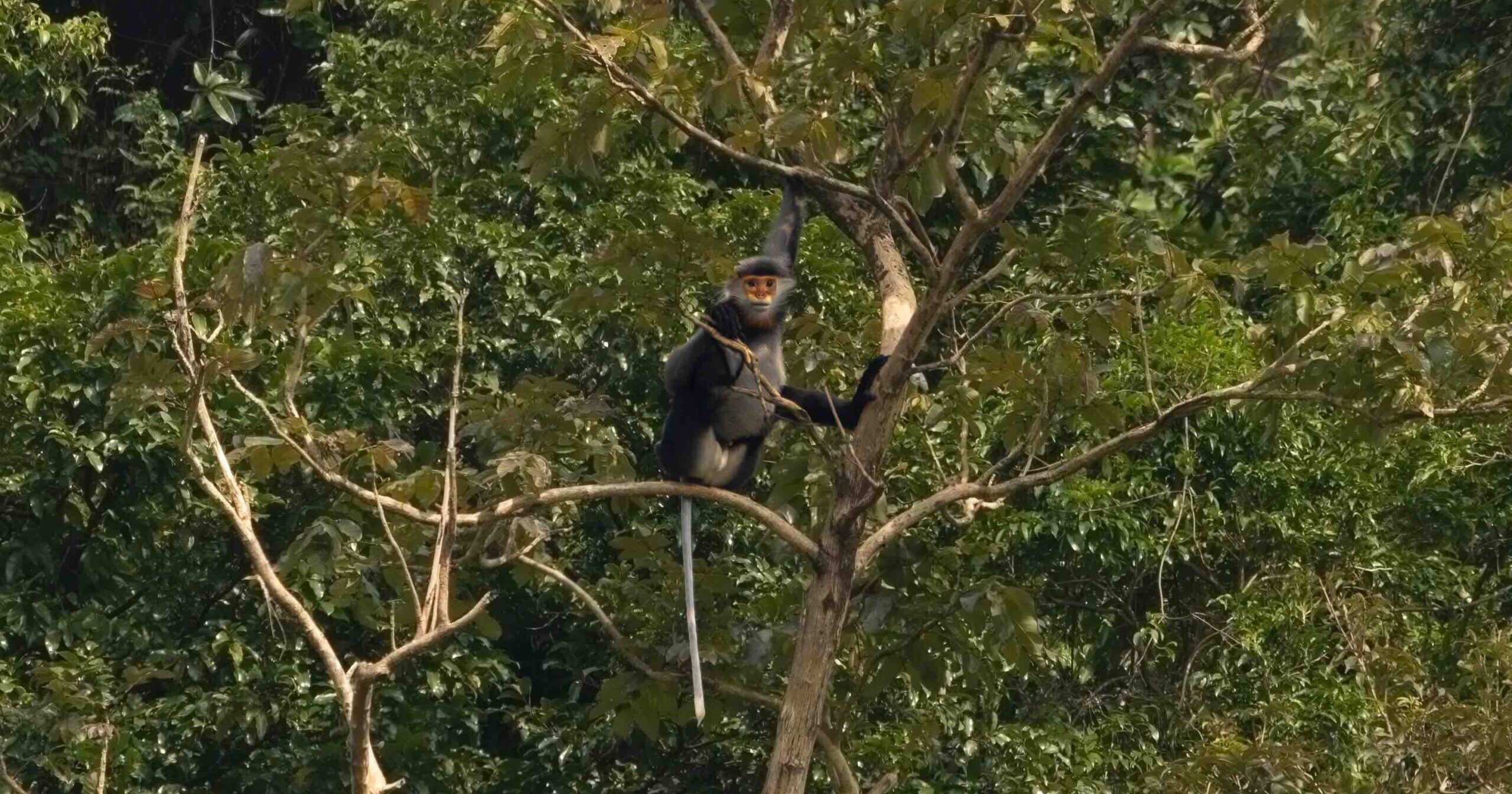
After another successful morning, it was time to relocate back to Da Nang to go after Vietnam’s most famous primate, the Red-shanked Douc Langur, often referred to as the “Queen of the Primates”, due to its spectacular and vibrant colouration and physical features.
We arrived a bit after midday, with the weather cool and foggy. As we passed through a cloud layer towards the top of the peninsula, we only needed to take a few steps when we discovered a family group of our target species. There it was, 10 minutes after we arrived, arguably the most beautiful primate in the world staring right back at us, only a few hours after seeing the Grey-shanked. Primate watching at its finest!
Not long after, we spotted our first group of Rhesus Macaque (around 10~) adding yet another primate to the trip list. We spent the next few hours enjoying the Red-shanked Douc Langur of Son Tra, before descending and checking into our accommodation after a few super intense (but majorly rewarding!) days of wildlife watching.

Day 9: Bach Ma National Park
On day 9, we departed at 6:00am and travelled to one of Vietnam’s most revered wildlife watching locations, Bach Ma National Park. After checking in to the park and organising the tickets, we went straight up to the summit. Following some recent landslides, part of the road was damaged, so we had to trek up to the final point.
It was not an optimal time for mammal watching, so we turned our attention to the few birds targets we had here, successfully pinning down both Indochinese Yuhina and Puff-throated Bulbul without too much trouble.
Our major target here was the Annamite Muntjac, a Bach Ma National Park specialist (but tricky to see). We’ve had a very good run with this species in recent months, so our expectations were high. Unfortunately, the Muntjac’s stayed away from us on this occasion, but we still saw a few interesting species such as East Asia Porcupine, Brown Wood Owl and many, many Mountain Scops Owl.
Day 10: Northern Yellow-cheeked Gibbon
Today, we spent the morning searching for the Northern Yellow-cheeked Gibbon, one of the most difficult primates to see currently in Vietnam. For those that read our reports regularly, will know that we track around 2-3 family groups on Bach Ma regularly on our tours. However, they have become quite difficult in recent months since the recent landslides. We figure that they have moved (or are still figuring out) their territories since the landslides.
A bit after dawn, we heard the first calls from the summit area and being sure of their direction, started the descent down the hill. After a few kilometres, they called again, this time much closer on an opposite cliff. We set ourselves up in a good position, hoping to spot some movement or use the calls to pinpoint us towards where they may be moving through the trees. However this was tough and despite our best efforts across the morning, the best we had were several lovely movements of gibbon song.
As a reward for our efforts, we spotted a nice group of Stump-tailed Macaque, (particularly nice to see wild ones after our animal of dubious providence down south) as well as finding a Siberian Thrush, another bird lifer for Gerald.
After lunch, we descended to some of the key trails at around mid-elevation on the mountain, a nice crossover area between the highlands and lowlands of the park. Here is a particularly good spot for two of Gerald’s other bird targets, the Brown (Austen’s) Hornbill and Black-throated Laughingthrush. Again, both birds performed well and though we had missed our gibbons, it was still nice to get three new bird targets.
On the way out of the park, we spotted our first Javan Mongoose for the trip, another mammal for the trip list.
Day 11: Hatinh Langur
Today was a travel day, as we had to leave Bach Ma National Park early in order to travel several hours north to reach the site for the Hatinh Langur, another one of Vietnam’s near-endemic and critically endangered primate species.
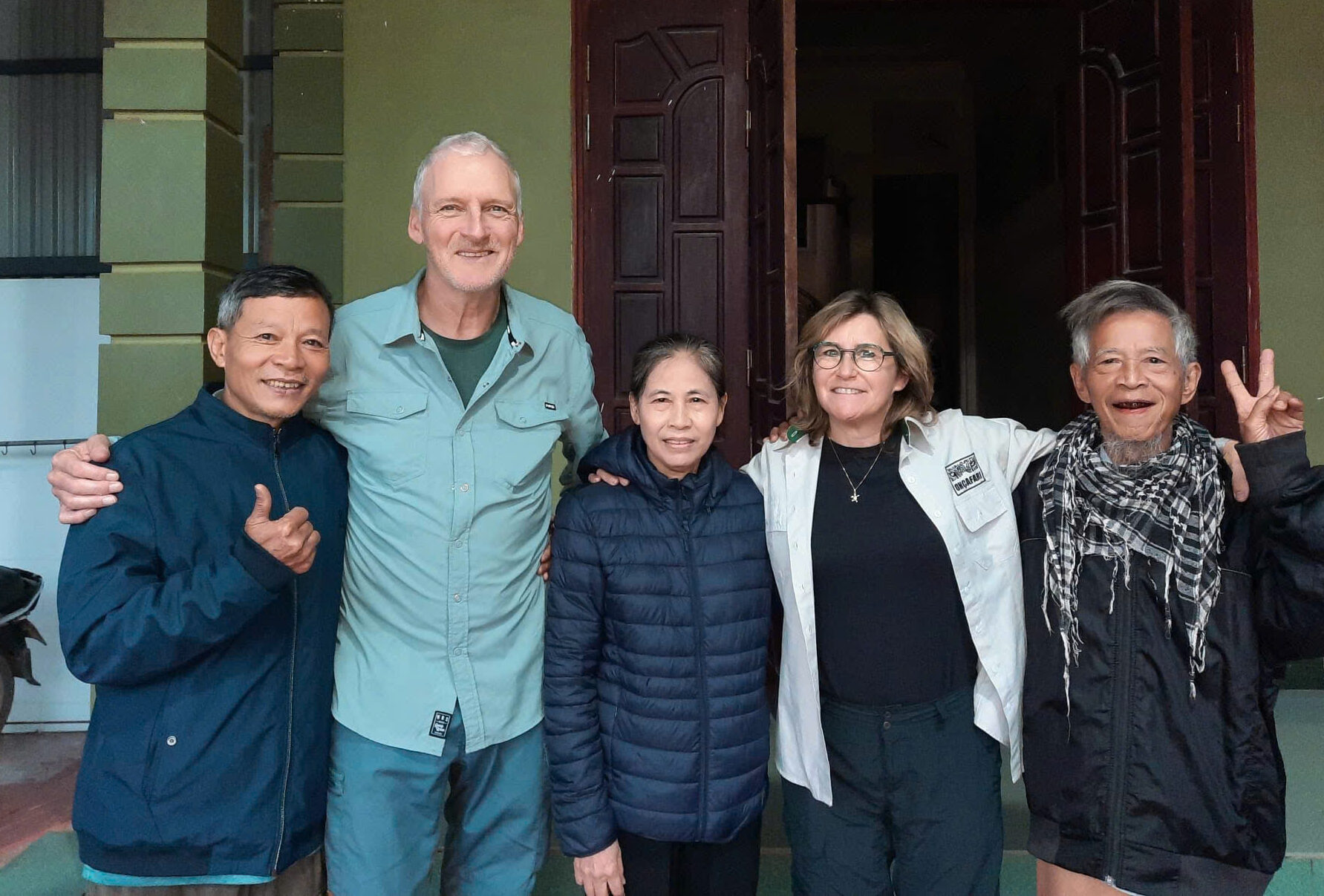
After a big day, we arrived in mid-afternoon, where we met our local support team who protect these animals and live side-by-side. You can learn more about them at here: Cộng đồng bảo tồn Voọc Gáy Trắng — Hatinh Langur Conservation Community
Most people when targeting this species seem to make the error of only going out in the morning, but experienced travellers know that the Hatinh are much more active and easier to see in the late afternoon, particularly during winter periods. We had a great afternoon with several groups and encounters. The highlight was our last group, who were very low and close. Another amazing Vietnamese primate under the belt!
Day 12: Ha Tinh Langur Reserve – Ninh Binh
Today was another day mainly set aside for travel. It was our last big run to get from the central area up to northern Vietnam and another set of unique biodiversity. We arrived in the afternoon, had some lunch and spent a bit of time searching for our next target the Delacour’s Langur. However, it was very cold around 8°C and a light drizzle of rain covered the site. We had the entire next morning set aside for this species, so as the wind and rain got worse, we called it a day.
Day 13: Van Long – Cuc Phuong National Park
This morning it was time to target the Delacour’s Langur again. Regrettably the weather hadn’t really improved, but for these situations we do have a backup plan. Knowing that the animals wouldn’t be out feeding or sun-basking in this kind of weather, we went searching for their caves to see if some may be poking their heads out. We went to one of the main cave areas and waited, until at around 10:00am a small troop of Delacour’s Langur decided to brave the weather and exit the cave. First came a scout, who huddled in the cold for a while. Another target in the bag!
It was time to travel to Cuc Phuong National Park, our last major site of the tour. In the afternoon, we cleaned up our various bird targets including Russet Bush Warbler, Grey-backed Thrush, Black-breasted Thrush, and Japanese Thrush, a very successful run.
After checking in and quick bite for dinner, it was time to move on to our nocturnal targets. Our first mammal of the night was a lovely Northern Palm Civet, followed closely by our first tick of the evening, an Hairy-footed Flying Squirrel. A few extra bonuses included Asian Vine Snake, Collared Scops Owl and a lovely encounter with a Mainland Leopard Cat sitting in the middle of the road.
Day 14: Cuc Phuong National Park
We started again at 6:30 am and went birding, successfully finding our two main birds targets, the Red-collared Woodpecker and White-winged Magpie, along with several other key northern Vietnamese forest species. After that, we moved deeper into the forest to continue searching for more species on our target list.
The final set was not easy (and that’s putting it lightly) however amazingly we were able to complete the entire set of targets, including Asian Stubtail, Annam Limestone Babbler, Rufous-throated Fulvetta, Limestone Leaf Warbler, and finally our last target, the Pied Falconet.
That last target took us a long time to find, but at the very last minute, we met another birding group and asked what they were watching. They answered, “Pied Falconet,” and boom there it was! We were extremely happy, just like children!
In the afternoon, we took a bit of time to rest in preparaton for another night of spotlighting. Unfortunately it was a very cold night (the entire of northern Vietnam had been suffering for a serious cold snap over the last fortnight or so), so the yield wasn’t as high as we had hoped. Still, we connected with some good species including Mekong White-bellied Rat, Hairy-footed Flying Squirrel, Collared Scops Owl, and a roosting White’s Thrush.
Our final highlight came around 4hrs after dark, a Small-toothed Ferret Badger, which was regrettably not our target Cuc Phuong Ferret Badger, but always a nice animal to see.
Day 15: Departure – Ha Noi
In the morning, there was nothing left for us to look for (a great success!), so we took the pace nice and easy. Then it was time to get up and ship to Noi Bai Airport where we said our goodbyes. It had been an amazing and mega trip, recording well over 250 species of wildlife, with almost all primate targets found including the one heard only Northern Yellow-cheeked Gibbon.
We would like to thank Gerald and his wife for choosing Next Continent and wish them all the very best for their future wildlife watching adventures!
Mammal List:
- Grey-shanked Douc Langur
- Red-shanked Douc Langur
- Indochinese Silver Langur
- Annamese Silver Langur
- Ha Tinh Langur
- Delacour’s Langur
- Northern Yellow-cheeked Gibbon (H/O)
- Stump-tailed Macaque
- Rhesus Macaque
- Northern Pig-tailed Macaque
- Common Long-tailed Macaque
- Woolly Horseshoe Bat
- Black-bearded Tomb Bat
- Lesser Short-nosed Fruit Bat
- Indochinese Ground Squirrel
- Pallas’s Squirrel
- Cambodian Striped Squirrel
- Maritime Striped Squirrel (also the Hainan ssp whilst in Cuc Phuong)
- Perny’s Long-nosed Squirrel
- Hairy-footed Flying Squirrel
- East Asian Porcupine
- Mekong White-bellied Rat
- Javan Moongose
- Small-toothed Ferrets Badger
- Northern Palm Civet
- Mainland Leopard Cat